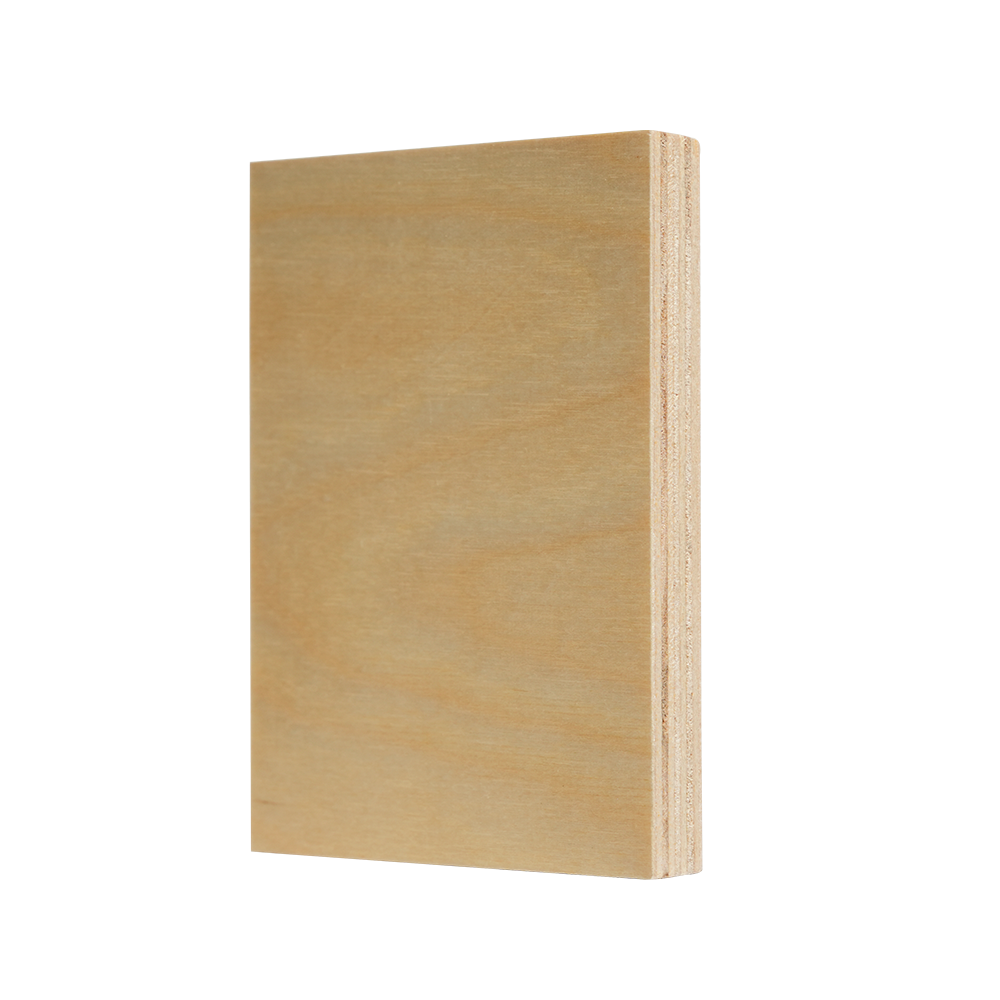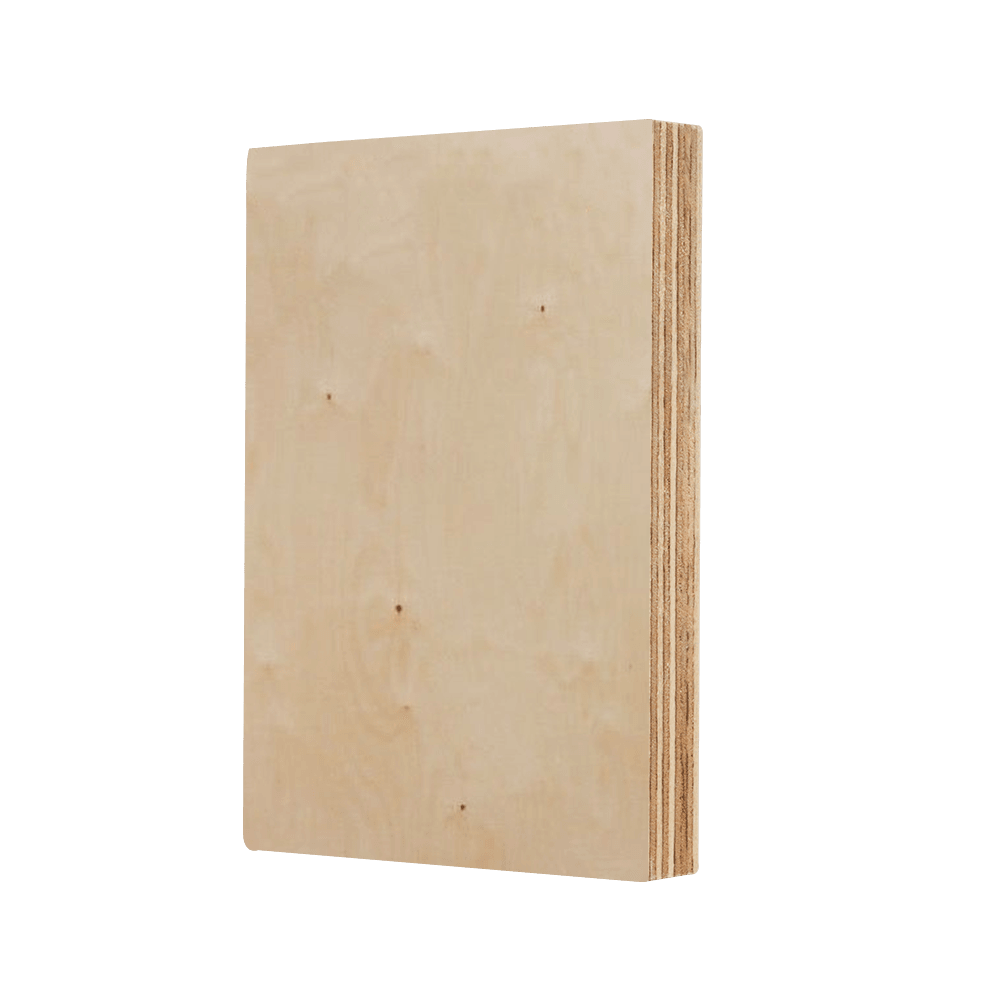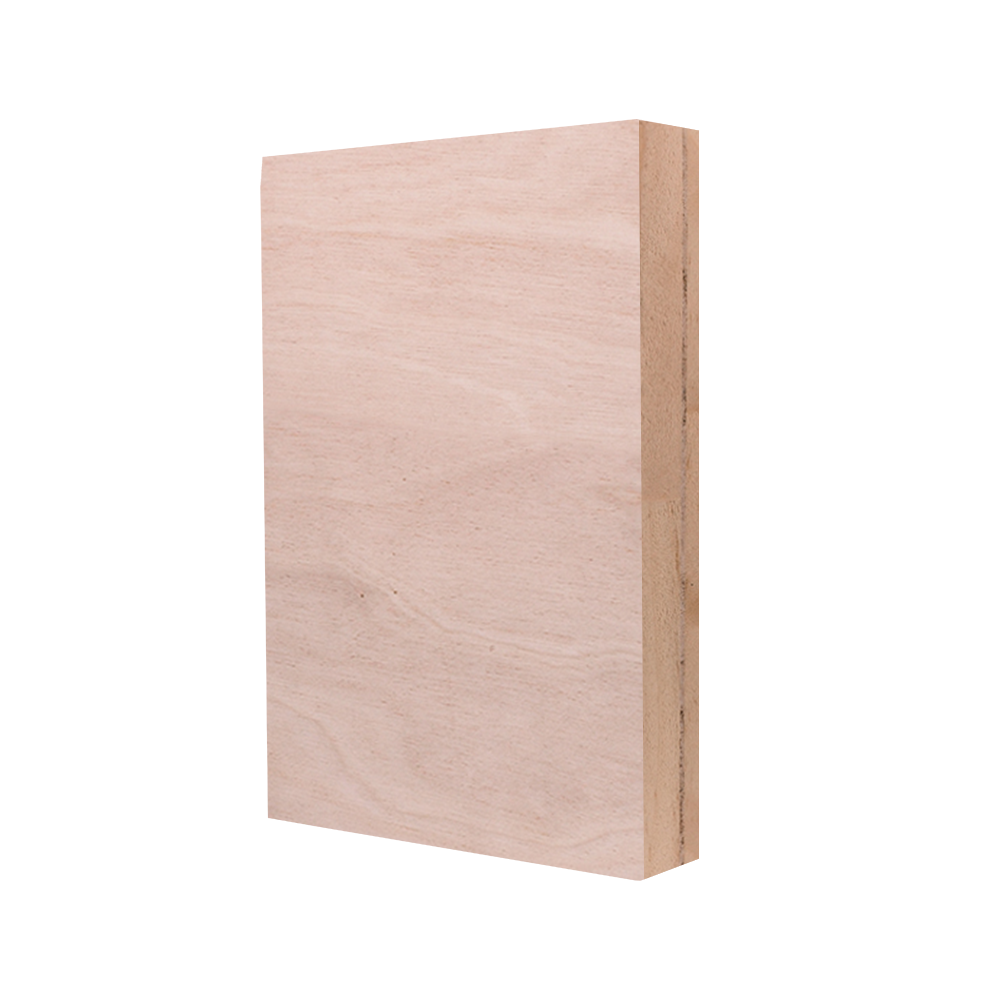

A few weeks ago, a customer sent us a close-up photo of a birch plywood edge and asked whether birch plywood is just a veneer. He had seen a thin, light surface layer over a thicker core and worried that he had paid for a decorative skin. It is one of the most common questions in workshop conversations, and the answer shapes how you cut, load, and specify the panel.
The short answer is no. Birch plywood is not a single veneer glued to a weaker core. It is an engineered wood panel built from several birch veneers, stacked at alternating grain directions and bonded under high heat and pressure. The veneer is the building block of the panel, not the entire product. A product described simply as “birch veneer” is often something different, such as a thin birch layer over MDF or particleboard. Understanding that difference prevents costly failures.
Key point: A veneer is a wood slice. Birch plywood is a complete structural panel made from layers of veneer. If only the outside is birch, you are buying a veneered board, not structural birch plywood.
In the wood industry, the word veneer has several meanings. A loose veneer is a thin sheet of wood, often 0.2 mm to 3 mm thick, sliced or peeled from a log and used as a decorative surface. A face veneer is the visible outer ply of a plywood panel. A plywood veneer layer, however, refers to every single wood layer inside the panel, not just the outside one. This is why the word birch appears in both “birch veneer” and “birch plywood” but means different things.
| Term | What it usually means | Structure |
|---|---|---|
| Loose birch veneer | A thin piece of birch used for surfacing | One single layer |
| Birch-faced panel | Birch on the outside, other core inside | Birch surface over MDF, particleboard, or another core |
| Birch plywood | Multi-layer panel with birch used for most or all plies | Cross-banded birch plies bonded together |
When a buyer says a panel is “just a veneer”, they usually mean it has a cosmetic birch skin over an unidentified core. That is a legitimate product category, but it is not the same as birch plywood. In structural birch plywood, each ply contributes stiffness, screw holding, and dimensional stability. The surface is simply the visible end of a layered system.
To understand whether birch plywood is just a veneer, it helps to walk through the factory process. A true birch plywood panel starts with birch logs, not with a single sheet of birch laid onto a cheap board.
The most important step is the cross-banded layering. Solid wood expands and contracts mainly along the grain. When veneers are stacked at right angles, each layer restrains the movement of the layer next to it. The result is a much flatter surface, better dimensional stability, and lower swelling when humidity changes.
A full birch core uses birch veneers from edge to edge. A lower-cost construction uses birch face and back plies with poplar, hardwood, or softwood in the middle. Both can be called birch plywood, but their weight, stability, and machine behavior are different. For projects where every layer must be birch, full-birch-core plywood sheets are the more predictable choice.
There is also the term “veneer core”. In plywood terminology, a veneer core simply means the core is built from veneers, as opposed to a lumber core made of solid wood strips. Most birch plywood is a veneer core product. So when someone says “it is just a veneer core”, they are not saying the panel is weak; they are describing the internal layer format.
Two panels with the same face grade can behave completely differently if the core is different. The face is what you see, but the core is what carries the screw, resists sagging, and determines how cleanly the edge machine.
| Core type | Typical inner plies | Weight | Screw holding | Best for |
|---|---|---|---|---|
| Full birch core | All birch veneers, often 7 to 21 plies | Dense and heavy | Excellent | High-end furniture, jigs, load-bearing shelving |
| Birch face, mixed core | Birch outer plies over poplar or softwood | Medium | Good | Interior panels, decorative joinery |
| Poplar core | Light poplar veneers | Light | Medium-low | Lightweight furniture and wall panels |
| MDF core | Solid fiberboard, no inner plies | Heavy | Poor edge screw holding | Birch-veneered doors, flat panels |
| Lumber core | Solid wood strips in the middle | Medium-high | Medium-high | Cabinets with routed edges and exposed cores |
When you are sourcing panels under a purchasing requirement, ask whether the core is all birch or a combination core. This question matters more than the cosmetic grade because it determines load path, fastener retention, and how the panel reacts to moisture over time.
The phrase “birch veneer” appears in many different contexts. A kitchen cabinet door labelled “birch veneer” is often a birch layer over MDF or particleboard. The substrate is flat, cheap, and stable enough for a painted or foil finish. That door is a veneered product. It is not the same as a multi-ply birch plywood cabinet carcass. Both have uses, but you should not specify one when you need the other.
If you are not sure what is inside a panel, cut a clean edge with a fine blade and inspect it closely. True birch plywood shows a repetitive pattern of thin layers with alternating light and dark colors. The edge is dense and tight. A birch-faced board shows one thin birch layer, then a thick, pale, featureless core.
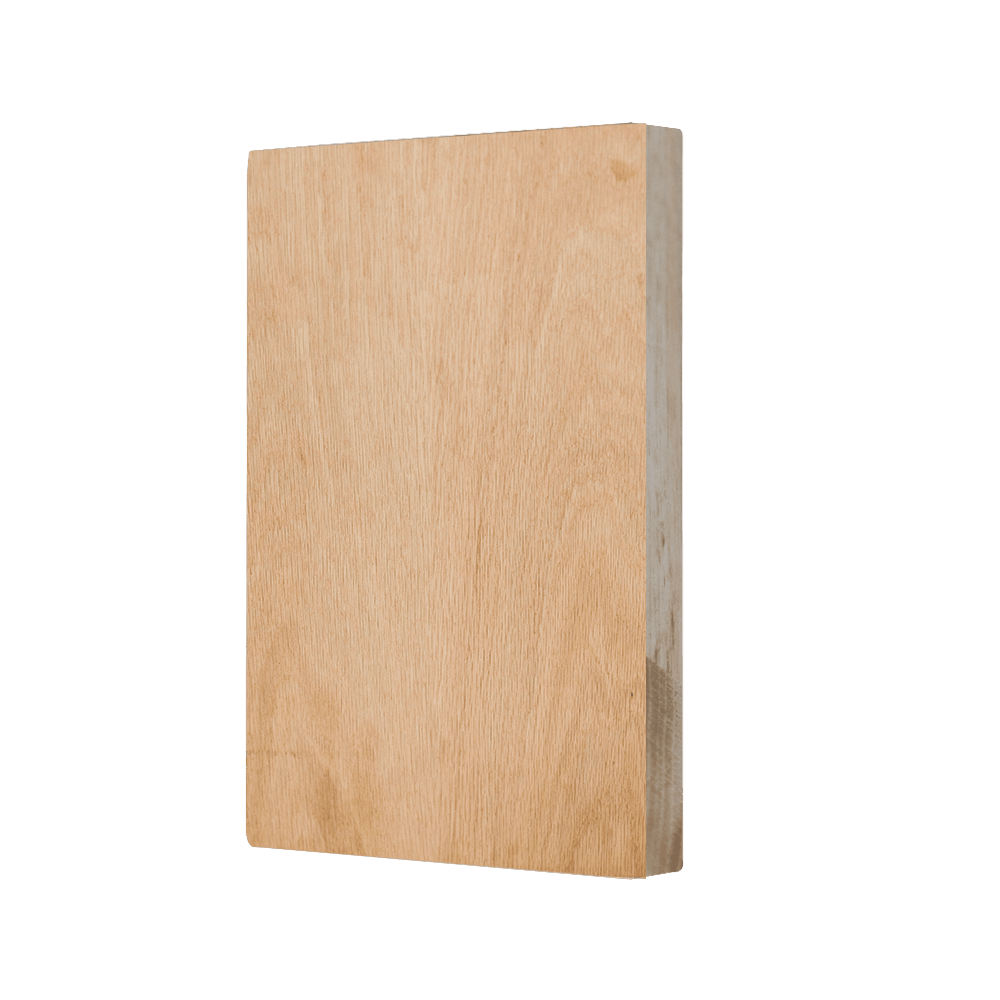
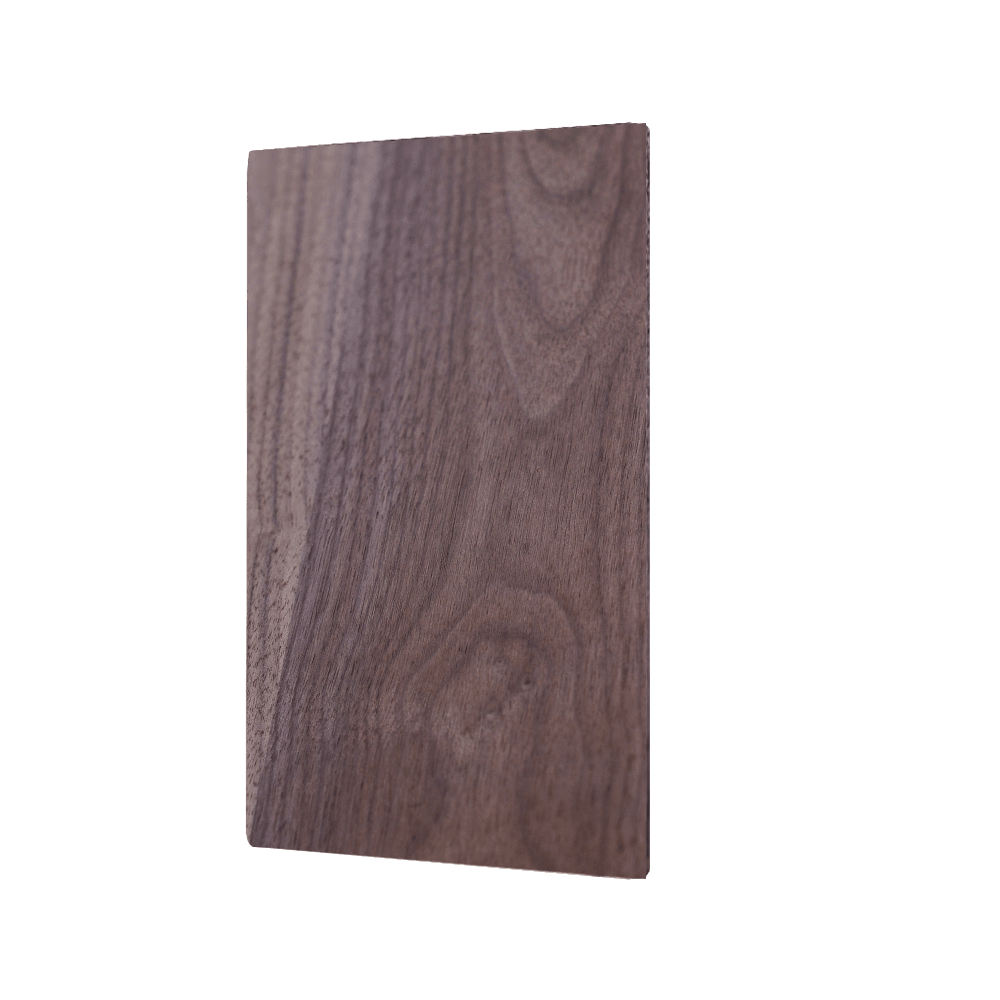
For decorative facades and interior walls where the core does not need to be all birch, wood-veneered birch plywood gives a clean appearance without the cost of full-birch construction.
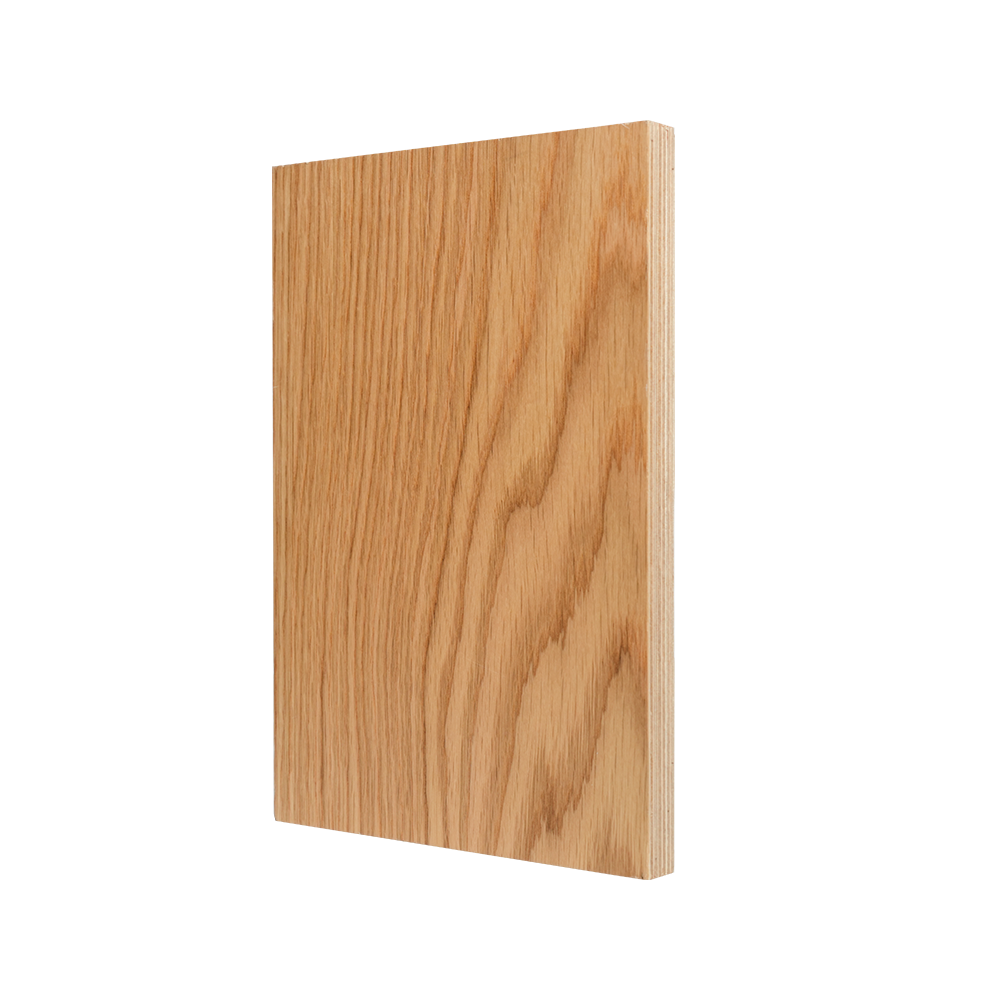 Wood Veneered Birch Plywood with Oak or Walnut SurfaceThis panel combines a solid wood veneer face with a birch core, offering a natural wood look for furniture and interiors while keeping costs lower than full-birch construction. Suitable for decorative facades and interior walls.View Product →
A birch face grade tells you how the surface looks, not how the panel performs. Face grade and core construction are separate variables. You can buy a beautiful B/BB face over a weak core, and it will still fail once the load exceeds the inner plies.
| Grade | Appearance | Typical use |
|---|---|---|
| B | Smooth sanded face with minimal repairs | Visible cabinetry and furniture |
| BB | Small patches, color variation, usable face | Paint-grade work and interior panels |
| CP | More repaired defects, less consistent color | Core material and hidden parts |
| C | Open checks, larger patches, lower finish quality | Function over appearance |
The glue line controls how the panel reacts to moisture. A B/BB face with interior glue is not suitable for exterior use. For humid rooms, furniture, or construction site exposure, choose a glue class that matches the environment.
| Glue class | Typical use | Characteristic |
|---|---|---|
| Interior dry-use glue | Bedroom furniture, indoor joinery | No prolonged moisture exposure |
| Melamine glue | Kitchens, bathrooms, damp interiors | Improved humidity resistance |
| Phenolic or WBP glue | Exterior panels, concrete formwork, structural use | Boiling-water-resistant bond line |
| Marine-bonded glue | Boat interiors, high-moisture projects | Tight bond designed for severe conditions |
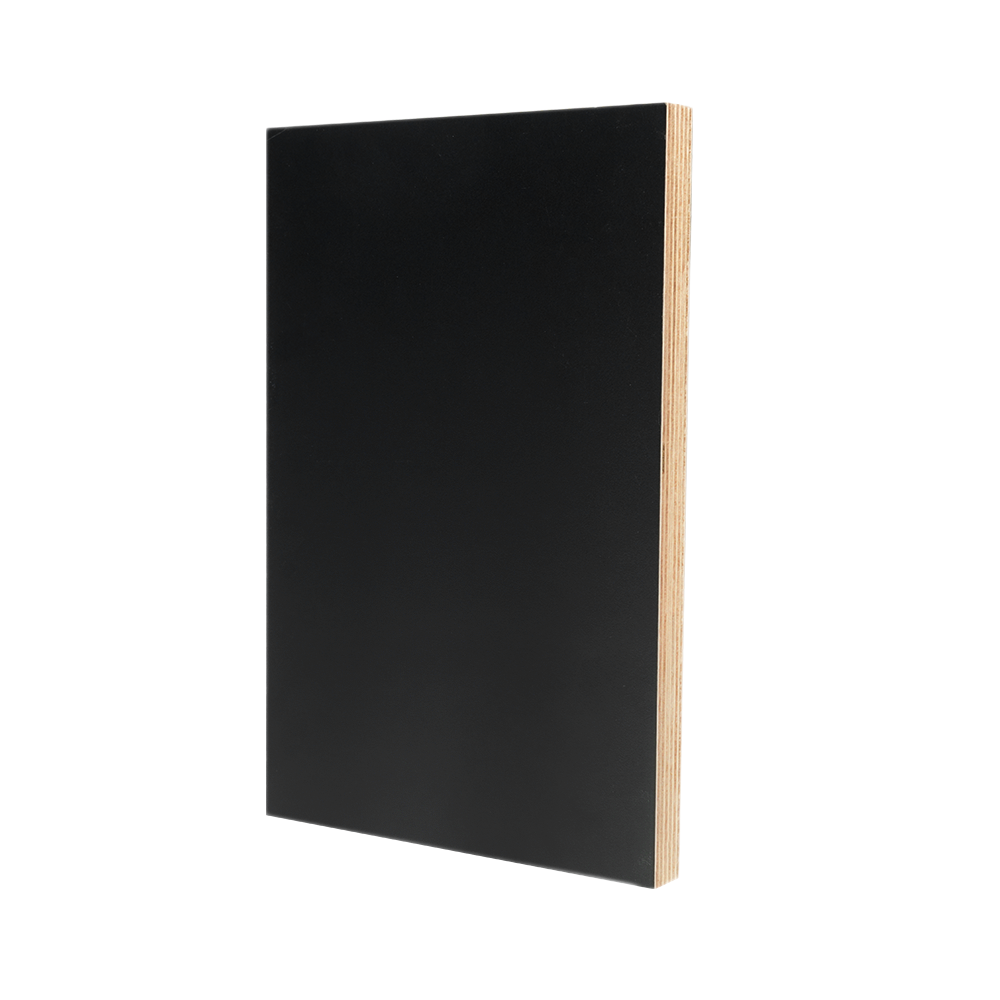
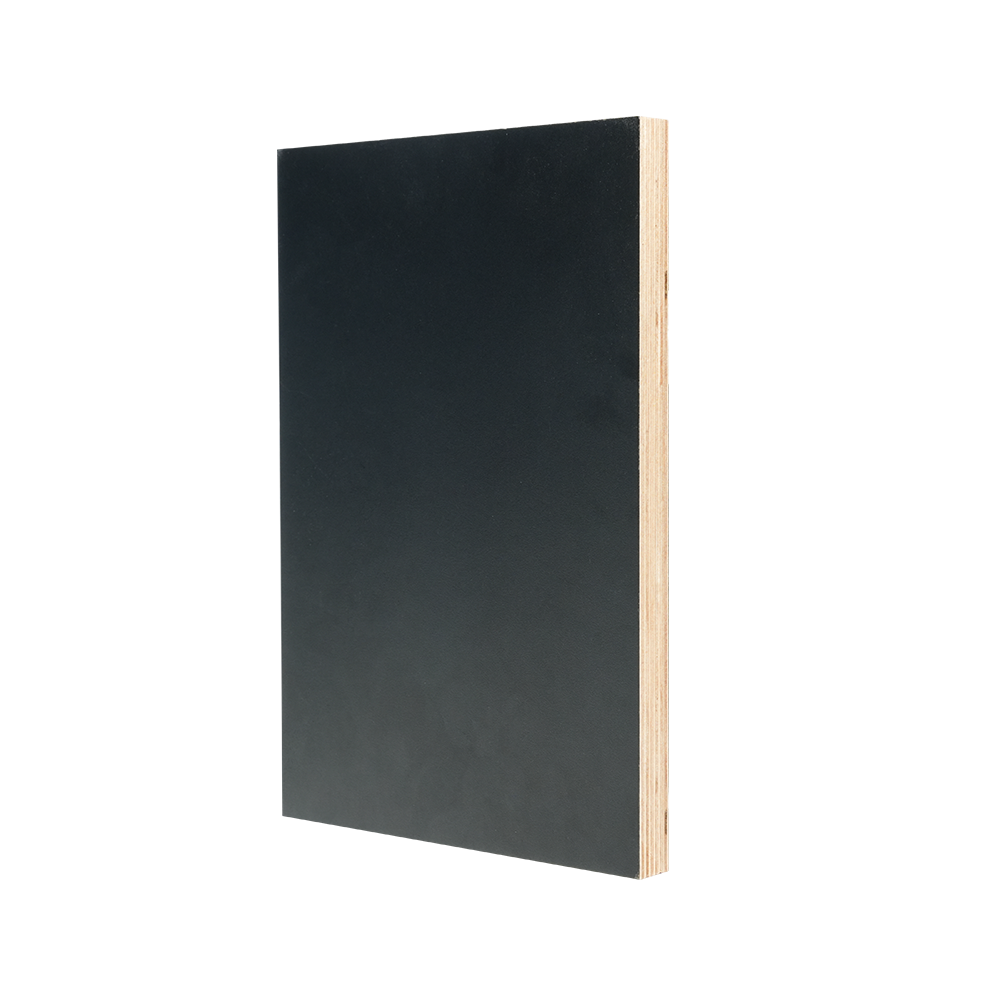
Film-faced birch plywood is a different product family. A phenolic film overlay protects the face from moisture and abrasion, but the core still carries the load. When a construction buyer asks for film-faced panels, the core specification and bond quality should be checked before the overlay is treated as a waterproofing shortcut.
If you need consistent faces for exposed cabinetry and furniture, start with a high-quality face grade.
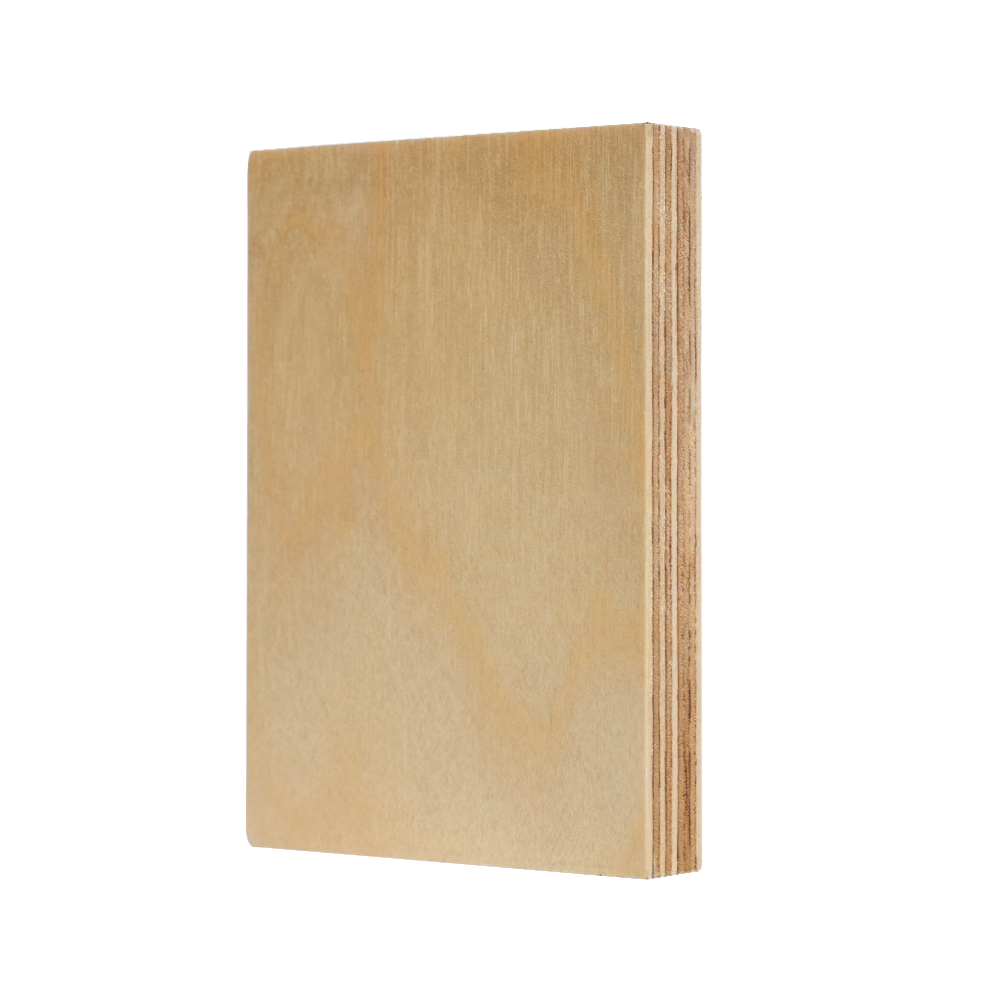 Top Grades Birch Plywood (B/BB and S/BB)With clean faces and cross-layered birch veneers, these panels provide strength, stability, and workability for exposed cabinetry and furniture. The front face grade differs, with B/BB having no visible imperfections, while S/BB allows a few.View Product →
The practical difference between birch plywood and a veneered board appears during machining and service. A true multi-ply birch panel keeps its edge, holds fasteners, and resists cupping in a way that a thin birch skin over MDF or particleboard cannot match.
Because birch veneer is dense and the plies are cross-banded, birch plywood delivers high stiffness without the weight of solid lumber. This makes it useful for furniture carcasses, workbenches, shelving, and structural panels where both strength and weight matter.
The alternating grain structure limits expansion and contraction. A veneered MDF panel can also be flat, but its edges swell more when exposed to moisture. Multi-ply birch plywood handles changes in humidity much better because each veneer layer locks the surrounding layers in place.
When you drill near an edge or rout a groove, the inner plies are what keep the material intact. In MDF or particleboard, the edge may crack or crumble. In birch plywood, the dense veneer layers create a mechanical lock around the fastener and a cleaner cut line.
| Property | Birch plywood | Birch-veneered MDF | Particleboard core |
|---|---|---|---|
| Edge screw holding | Excellent | Poor to fair | Poor |
| Moisture swelling at cut edges | Low to moderate | High | High |
| Router edge finish | Clean and compact | Fuzzy at substrate | Chipped layer |
| Impact resistance | High | Moderate | Low |
The best starting point is to separate visual requirements from structural requirements. If the panel will carry a load, hold screws near an edge, or face humidity, the core and glue line should be your first decisions. If the panel is purely decorative, the face grade and surface finish matter more.
Use BB/BB or B/BB faces, 15–18 mm thickness, with melamine or WBP glue. The face should be sanded and free from open defects for lacquer, oil, or a clear finish.
Use film-faced panels with a structural core and a smooth or anti-slip phenolic coating. Reusability depends on the core quality, release agent, and site handling.
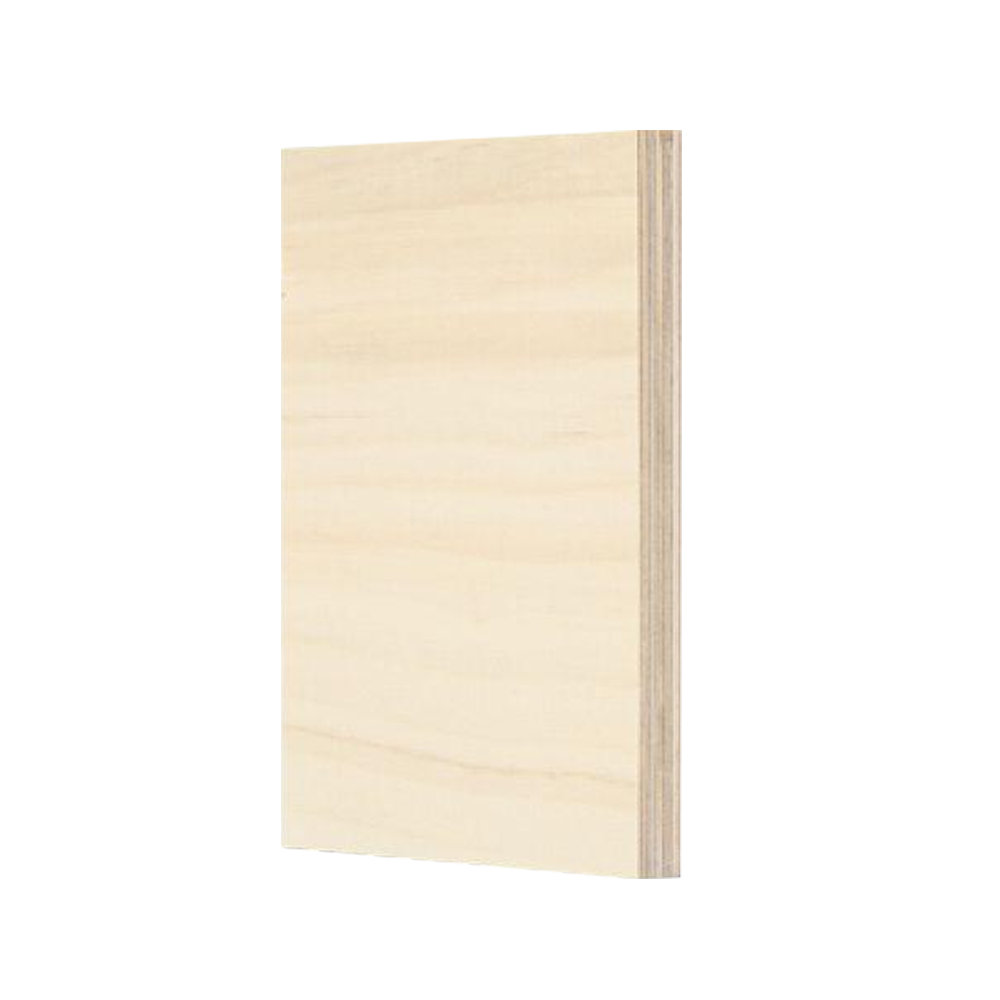
Consider wood-veneered or ClearPly panels when you need a uniform light appearance and minimal surface telegraphing.
Use thin birch plywood with a tight core structure. Avoid core voids because laser and router paths will expose them on the cut edge.
| Thickness | Typical use |
|---|---|
| 3–6 mm | Model making, drawer bottoms, flexible curved parts |
| 9–12 mm | Cabinet backs, light shelving, decorative wall panels |
| 15–18 mm | Furniture carcasses, shelving, doors, formwork surfaces |
| 21–24 mm | Workbenches, load-bearing jigs, structural elements |
For concrete formwork and heavy-use surfaces, film-faced or anti-slip construction panels are the usual starting point.
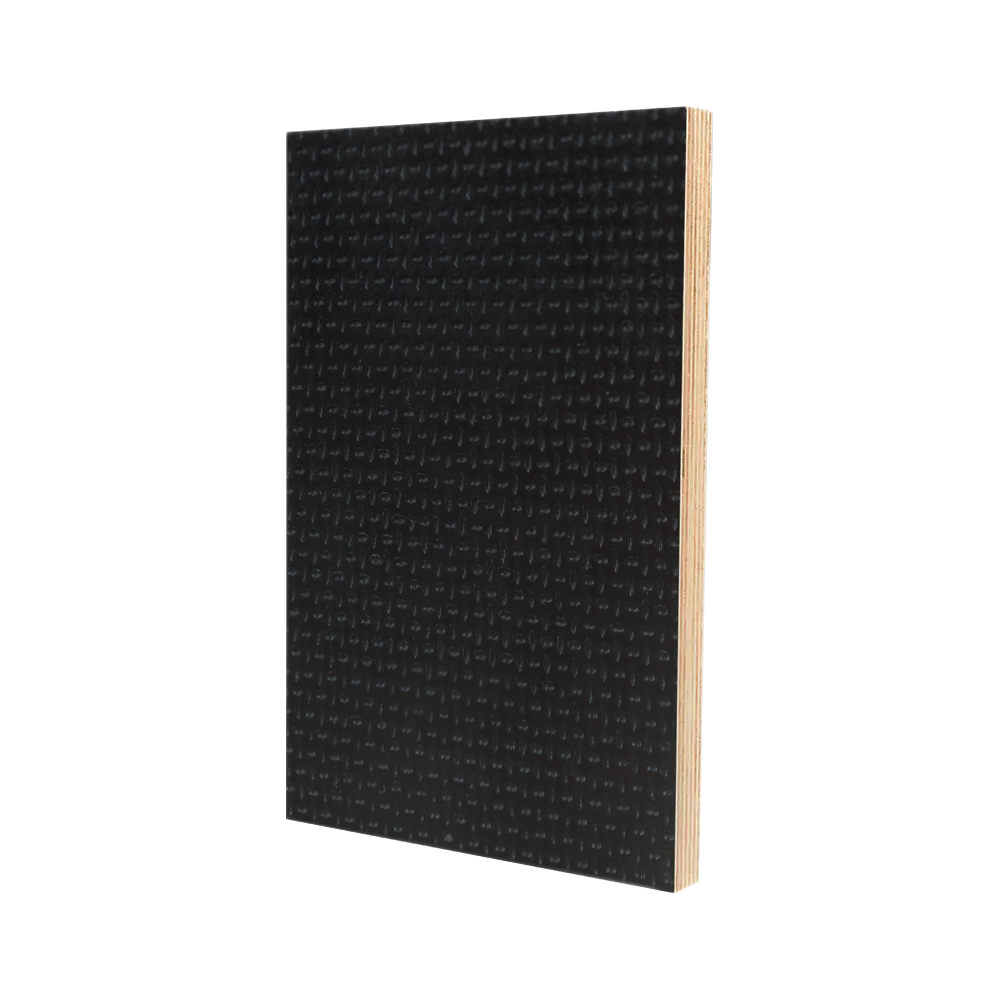 Anti-slip Film-Faced Birch PlywoodThis panel features a Dynea anti-slip film on a 99.99% birch core, improving friction in wet and dry conditions. It is ideal for formwork, temporary platforms, and heavy-use surfaces where safety and load-bearing performance are critical.View Product →
For a broader comparison of properties, edge treatments, and common mistakes, the Ultimate Guide to Birch Plywood Properties, Uses and Selection goes into more detail.
It is real wood. The panel is made from multiple birch veneers that are sliced from logs and bonded into a solid engineered board. The veneer is not a substitute for solid wood; it is an efficient and stable form of wood construction.
Birch plywood has birch veneers throughout most or all of its construction. Birch-veneered plywood has a birch face over a different core, such as MDF, particleboard, poplar, or softwood. The outer surface may look similar, but the structural performance is different.
Usually yes. A clean cut edge will show many thin, tight layers with alternating light and dark colors. A birch-veneered board will show one thin light layer and a thicker, featureless core. Voids or gaps in the middle layers indicate low-cost plywood rather than structural grade.
The grade letters describe the face and back surfaces. B means a smoother face with fewer repairs, while BB allows small patches and color variation. The pair B/BB or BB/BB tells you the quality of both visible faces. It does not describe the core or the glue line.
It depends on the glue line and surface treatment. Interior-grade birch plywood should not be used where it will be exposed to moisture for a long period. For exterior or humid conditions, choose phenolic, WBP, or marine-bonded plywood and seal the cut edges.
Baltic birch is a regional trade name traditionally associated with panels made in the Baltic region with a dense all-birch core and reliable face quality. Outside that region, the same construction can be called full-birch plywood. The name alone is not a guarantee; the ply count, core type, and glue line matter more than the label.
محصولات مرتبط

Copyright © Tianma Lvjian (Nantong) Wooden Structure Technology Co., Ltd. Rights Reserved.